
Workplace
Business Professional Attire Guide: Look Sharp and Confident


Business professional attire explained simply. Learn what to wear, what to avoid, and how to dress confidently in professional settings.
Business professional attire refers to formal clothing typically worn in corporate or office settings, including tailored suits, dress shirts, polished shoes, and clean accessories. It communicates confidence, professionalism, and respect for the work environment.
Have you ever stood in front of your closet thinking, “Does this look professional enough?” You’re not alone. Many people struggle to understand what business professional attire actually means, especially since dress codes vary from one workplace to another.
At its core, business professional attire is about looking polished, respectful, and refined. It’s more formal than business casual and sets the tone for credibility and confidence, whether you’re going to an interview, a presentation, or a corporate office.
Let’s break it down step-by-step so you can dress confidently without guessing. 👔✨
What Is Business Professional Attire? 👔
Business professional attire refers to a formal dress code commonly seen in traditional workplaces such as law firms, finance companies, corporate offices, and government roles. This style focuses on tailored pieces, clean lines, and neutral colors.
This dress code is more structured than business casual. So, while business casual allows for khakis and cardigans, business professional calls for suits and button-down shirts. The idea is to present yourself as someone reliable and capable.
This type of dressing also supports your image. When you look put together, you often feel more confident, focused, and prepared for conversations and professional challenges.
Why Business Professional Attire Matters 💼
Clothing is non-verbal communication. When you dress in business professional attire, you send a message before you even speak. That message is: I take myself, my work, and this environment seriously.
Employers and clients often use appearance as part of first impressions. The way you dress can influence trust, respect, and credibility in a workplace.
Additionally, wearing professional attire can improve your internal mindset. Many people report feeling more motivated and productive when dressed in professional clothing.
Key Components Of Business Professional Attire 🧩
Business professional clothing usually includes:
- Tailored suits
- Button-down shirts or blouses
- Professional shoes (closed-toe)
- Neutral color palettes
- Simple accessories
The fit and quality of your clothing matter more than brand names. Well-fitted clothes instantly elevate your presence, while clothes that are too loose or too tight can undermine your professionalism.
Business Professional Attire For Women 👩💼
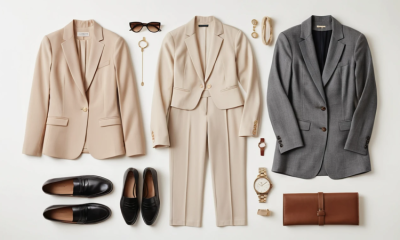
Women’s business professional attire can vary depending on workplace culture, but it generally includes structured, polished pieces designed for a formal environment.
Some common items include:
- Tailored suits (pants or skirt suits)
- Blouses or modest tops with sleeves
- Closed-toe heels or flats
- Minimal jewelry
- Neutral colors like black, gray, navy, or beige
Skirt lengths should typically fall around the knee. Patterns should be subtle or very minimal, ensuring the outfit maintains a clean and classy appearance.
Business Professional Attire For Men 👨💼
Men’s business professional attire tends to follow classic tailoring and straightforward styling.
This includes:
- A well-fitted suit in a neutral color
- Solid or subtly patterned button-down shirt
- Tie (solid, striped, or simple pattern)
- Leather belt that matches the shoes
- Polished dress shoes (Oxfords or loafers)
Avoid loud colors and overly trendy styles. The goal is timeless and sharp, not flashy or distracting.
Formal Clothing Examples for Both Men and Women
| Clothing Item | Women Examples | Men Examples |
| Suit | Blazer + Dress Pants or Skirt | Two-piece Suit (Tailored) |
| Shirt/Top | Blouse or Shirt | Button-Down Shirt |
| Shoes | Closed-Toe Heels or Flats | Oxfords, Loafers |
| Accessories | Minimal Jewelry | Tie, Watch |
Best Colors For Business Professional Attire 🎨
Neutral tones are your best friend when dressing professionally. They convey maturity, calm, and professionalism.
Some great choices:
- Black
- Navy
- Charcoal
- Gray
- Beige
- White
- Cream
Small pops of color are fine (like a maroon tie or pastel blouse), but keep the overall look balanced and understated.
Fabrics That Look Professional 🧵
Quality fabrics make a big difference in appearance and comfort. Some recommended fabrics include:
- Wool or wool blends (for suits)
- Cotton (for shirts)
- Silk or rayon blends (for blouses)
- Leather (for belts and shoes)
These fabrics maintain structure, resist wrinkling, and photograph well—important for both in-person and virtual meetings.
Business Professional vs. Business Casual ⚖️
It’s easy to confuse these two, but they are not the same. Business casual allows more comfort and variety, while business professional is more formal and refined.
| Feature | Business Professional | Business Casual |
| Suit Required | Yes | No |
| Colors | Mostly Neutrals | More Colors Allowed |
| Shoes | Dress Shoes Only | Flats, Loafers, Sometimes Sneakers |
| Overall Look | Formal & Structured | Polished but Relaxed |
Grooming And Hygiene Matter Too ✨
Even the most expensive suit can look unprofessional if grooming is neglected. Good grooming shows attention to detail.
Key grooming tips:
- Clean and trimmed nails
- Styled hair (neat and intentional)
- Light or no fragrance
- Clean and wrinkle-free clothes
These small details have a big impact on how others perceive you.
Accessories To Elevate Your Look 💍⌚
Accessories should enhance—not distract.
Smart accessory choices:
- Simple stud earrings
- Thin necklaces
- Classic watch
- Structured handbag or briefcase
Avoid bold, noisy, or flashy accessories that pull focus away from your professionalism.
How To Build A Business Professional Capsule Wardrobe 🧳
A capsule wardrobe ensures you always have something polished to wear.
Start with:
- One black suit
- One navy or gray suit
- 3–5 neutral shirts
- 1–2 pairs of dress shoes
- Simple accessories
This foundation lets you mix and match effortlessly.
Budget-Friendly Tips For Professional Attire 💸
Looking polished doesn’t always mean buying expensive brands.
Try:
- Outlet stores
- Seasonal sales
- Secondhand stores
- Tailoring inexpensive clothes for better fit
Fit matters more than price. A $40 tailored blazer can look better than a $400 ill-fitting one.
Outfits To Wear For Interviews 🎤
Interview attire should always lean more formal.
For women:
- Dark suit + light-colored blouse + closed-toe shoes
For men:
- Navy or charcoal suit + white shirt + understated tie
Avoid perfume or cologne. The focus should be on your words and confidence.
Common Mistakes To Avoid ❌
These things quickly make business attire appear unprofessional:
- Wrinkled clothing
- Loud prints or neon colors
- Overly casual shoes
- Heavy makeup or strong scents
- Clothes that are too tight or too loose
Always aim for clean, polished, and balanced.
Cultural Considerations In Professional Dress 🌍
Some workplaces and regions have unique expectations for dress. Consider:
- Religious dress allowances
- Regional climate
- Industry norms
- Company culture
When unsure, observe your environment or ask HR.
Conclusion 🎯
Business professional attire is more than just clothing—it’s a reflection of confidence, respect, and communication. By choosing well-fitted, neutral, and polished clothing, you send a message that you’re prepared, focused, and capable. With the right essentials and a little planning, dressing professionally becomes easy and natural.
FAQs
What is business professional attire for interviews?
This includes a tailored suit, dress shoes, and minimal accessories. Aim for clean lines and neutral shades. You want to appear polished, confident, and respectful.
Can women wear pants in business professional dress codes?
Yes, absolutely. Tailored dress pants paired with a blazer are completely acceptable. Fit and fabric quality matter more than style.
Are jeans ever acceptable in business professional settings?
No, jeans are considered too casual. Save them for business casual environments or casual Fridays.
How many suits do I need to start?
Start with one black and one navy or gray suit. These neutral colors allow for mixing and matching with different shirts and shoes.
Do shoes matter in business professional attire?
Yes, shoes have a big impact. Closed-toe, polished, professional shoes complete the outfit and add credibility.

Small Business Financial Planning Services That Drive Growth

Local Small Business Grants California: Smart Funding Guide

Business Casual For Women: Smart Stylish Guide

Simply Business Insurance Guide: Smart & Easy Choice

Venmo Business Account Guide: Smart & Easy Success
Simply Business Insurance Guide: Smart & Easy Choice
Business Casual For Women: Smart Stylish Guide
Local Small Business Grants California: Smart Funding Guide
Small Business Financial Planning Services That Drive Growth
-
 Insurance4 weeks ago
Simply Business Insurance Guide: Smart & Easy Choice
-
 Business3 weeks ago
Business Casual For Women: Smart Stylish Guide
-
 Small Business2 weeks ago
Local Small Business Grants California: Smart Funding Guide
-
 Finance4 days ago
Small Business Financial Planning Services That Drive Growth